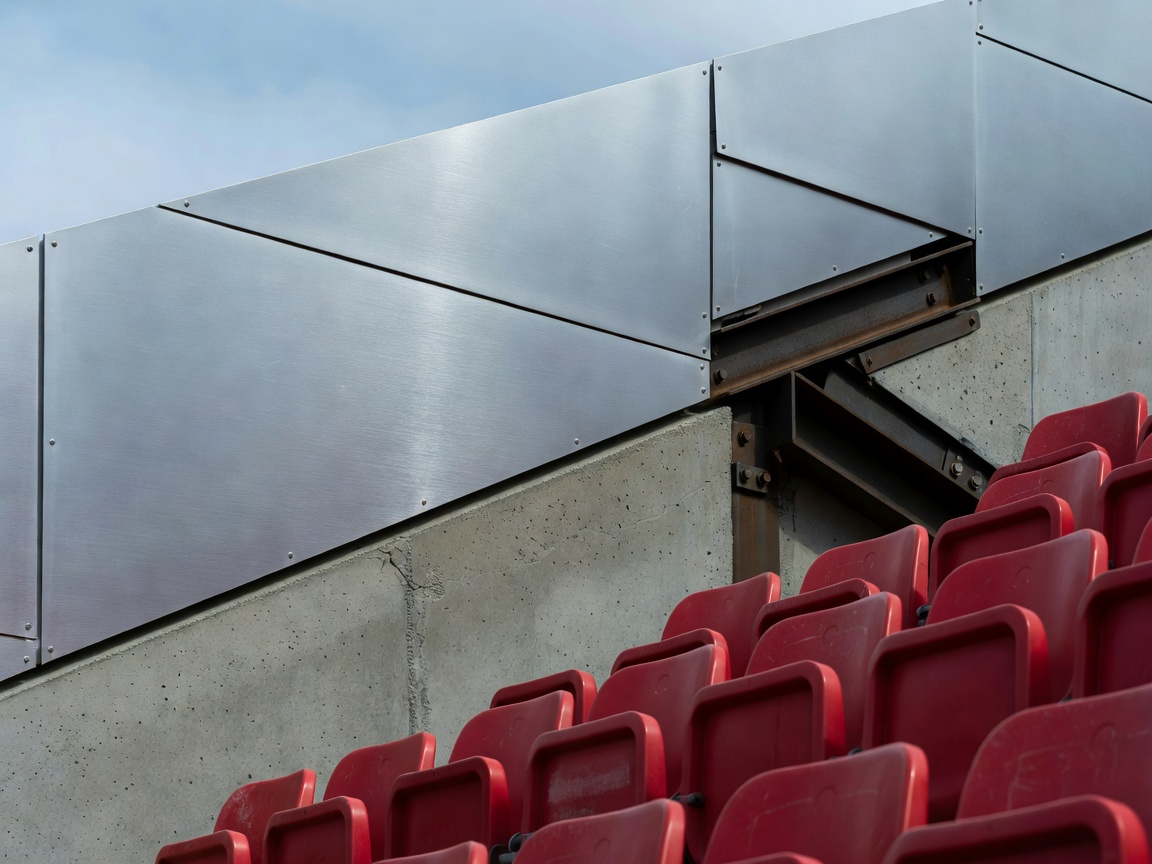
Materials are not a decorative layer added after a building is planned. They influence how a venue is built, used, maintained and remembered. They also mediate between the large scale of a roof or stand and the individual experience of a handrail, seat or doorway.
Concrete, steel, glass and timber
Concrete can express mass and permanence, and it often forms robust structural or circulation elements. Its surface can be left textured or carefully finished. Exposed concrete may feel calm and direct, but it can also appear hard or cold without good light, wayfinding and human-scale details.
Steel supports long spans and visible frameworks. Roof trusses can reveal how a structure carries weight, turning engineering into part of the venue's character. Painted or protected steel needs inspection and upkeep appropriate to its setting. Glass brings daylight and views into lobbies and shared spaces, though its use should consider glare, heat and bird-safe design. Timber can add warmth to interiors and public rooms; its application depends on fire strategy, exposure, maintenance and project-specific requirements.
Façades and roofs: weather, identity, upkeep
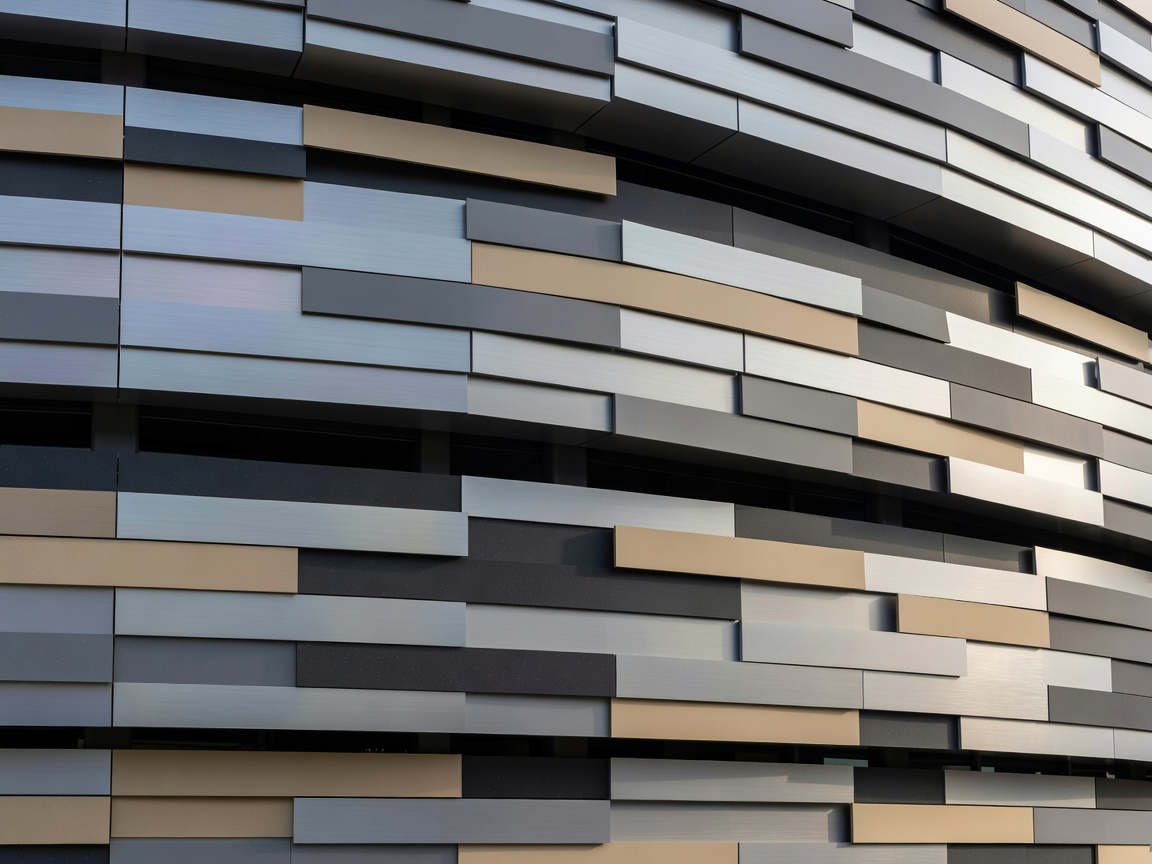
A façade system is the assembly forming a building's outer enclosure. It can filter daylight, provide weather protection and give a large venue a recognizable texture without copying a team's identity. Screens and perforated panels may allow visual depth; solid cladding can provide a more continuous edge. Every solution has its own cleaning, repair and replacement needs.
Roof materials and structures affect shelter, daylight and the experience of sound. A covered concourse can make arrival more comfortable, while a roof over seating can change how spectators hear one another. Roof access and maintenance are important parts of the design from the outset. Material choices should consider the local weather and the long-term work needed to keep the building performing as intended.
Seating, acoustics and light
Seats are among the few venue elements spectators use directly for long periods. Shape, spacing, surface and weather exposure influence comfort. Materials must also withstand cleaning and repeated use. A seat colour can contribute to the visual identity of a stand, but it should not be mistaken for a substitute for comfort, inclusive planning or durable detailing.
Acoustic treatment controls how sound is absorbed or reflected. A lively crowd is part of sporting atmosphere; carefully placed absorptive surfaces can help avoid excessive reverberation in enclosed spaces. Lighting works in parallel: natural light makes a lobby feel open and supports orientation, while artificial light needs to serve the activity and avoid discomfort. Both have to be considered with surfaces that reflect, diffuse or absorb light.
Raw industrial or warm and welcoming?
A raw industrial palette foregrounds structure and can communicate clarity, robustness and a sense of scale. A warmer hospitality-oriented palette might combine timber, soft finishes and more varied lighting to encourage lingering. These approaches are not opposites: one venue may use durable, exposed materials in circulation areas and warmer finishes in places intended for conversation or rest.
The right balance is specific to the venue's purpose. An overly polished public interior can feel disconnected from a lively stand; a uniformly hard environment can be tiring and difficult to understand. Thoughtful material transitions help signal that visitors are moving between threshold, concourse, seating and quieter rooms.
Wayfinding and the human touch
Wayfinding is how a person understands where they are and where to go. Colour, texture, signs, daylight and visible landmarks can work together to make a route intuitive. A change in flooring may quietly mark a threshold; a view back toward a distinctive roof structure can help someone orient themselves. Clear type and accessible contrast remain essential.
Durability and maintenance are part of a venue's design quality. Materials exposed to weather, heavy footfall or frequent cleaning need appropriate detailing. A finish that looks refined at opening may be less successful if it is difficult to repair or keep clean. Long-term care is not an operational footnote; it influences how the building continues to feel.
Good for
- Understanding how finishes shape a spectator's day.
- Comparing expressive structure with warm public interiors.
- Thinking about durability as part of design quality.
What to know
- Every material performs differently in its local climate.
- Maintenance needs depend on detail, use and exposure.
- Visual character should support, not obscure, wayfinding.
Advantages
- Material contrasts can clarify a building's different zones.
- Daylight and texture can help spaces feel inviting.
- Robust, repairable finishes can support long-term use.
Limitations
- Hard finishes may increase reverberation or visual glare.
- Complex façades can require demanding upkeep.
- One finish cannot satisfy every comfort and performance need.